



In the early 1970s, the oil sector was reorganized following major geopolitical changes, culminating in the oil shock of 1973. Today, we see a parallel in the current evolution of frontier AI labs and the massive restructuring of the oil sector in the early 1970s in the context of widespread geopolitical turmoil. If the parallel holds, AI could be approaching a fundamental reorganization of its entire value chain. It’s definitely not too early to reflect on what it would look like on the other side.
We are not claiming that AI will replay the history of oil exactly. It is just that, as the famous quote goes, “history does not repeat itself, but it often rhymes,” and we believe the history of oil provides a useful framework for considering what may happen next in AI—and by extension, in compute, energy, and finance.
Specifically, the parallel is that both industries grow capital-intensive and financially interconnected at the precise moment their foundational assumptions begin to fail. In the 1970s, the oil shocks exposed the fragility of an industry built around cheap and perceived abundant supply, leading to a profound reorganization of who controlled the assets, who could provide the services, who controlled the resources, who financed the infrastructure, and who ultimately captured the profits. AI may be approaching a similar point, leading to a fundamental reorganization across its entire value chain.
Indeed, just like the oil industry in the postwar era, the AI industry seems to have been built around the expectation that demand for compute will keep rising, that ever larger amounts of capital can be deployed in data centers and GPUs, and that frontier labs will continue to absorb that capacity through increasingly expensive models. But the physical and financial structure underneath those ever-growing assumptions is becoming harder to ignore. If compute becomes pricier while large-scale training becomes harder to build and finance, the current value chain will stop making economic sense.
The question is what happens when that value chain starts to break apart. To us, it’s obvious that the history of the oil industry provides an answer.
The oil industry before the shock
The oil industry of the postwar era was unusually integrated. A handful of large companies controlled much of the chain from finding oil underground to selling gasoline at the pump. The so-called “Seven Sisters”—that is, Exxon, Mobil, Chevron, Texaco, Gulf, BP, and Shell—all combined exploration, production, transportation, refining, and distribution at an enormous scale. This structure worked because the economics of the industry supported it: oil was abundant, demand was rising, transportation costs were falling, and these powerful companies could deploy capital across the entire chain.
The system also depended on a particular geopolitical order. America became deeply involved in the Middle East after World War II, notably through its relationship with Saudi Arabia. In 1945, President Roosevelt famously met King Abdulaziz aboard the USS Quincy, helping establish a strategic relationship that would become central to the postwar energy system. Meanwhile, the Texas Railroad Commission, the original regulator of the oil industry, demonstrated that coordinated production controls by US authorities could exert enormous influence over oil supply and prices worldwide.
Then the structure began to change. In 1956, Egypt’s President Gamal Abdel Nasser nationalized the Suez Canal, triggering a military intervention by Britain, France, and Israel that the US opposed and helped bring to an end. The episode became an early demonstration of the changing relationship between Western powers, resource-producing countries, and strategic infrastructure. Then in 1960, Iran, Iraq, Kuwait, Saudi Arabia, and Venezuela founded OPEC, and over the following decade, producing countries increasingly asserted control over their natural resources and demanded a larger share of the prize.
As a result, by the early 1970s, the old arrangement was under severe pressure. National oil companies were taking greater control over reserves, and the previously dominant Western oil companies faced governments increasingly willing to renegotiate contracts or nationalize assets. Ultimately, the 1973 oil embargo brought the system to a breaking point and accelerated its overhaul, exposing how vulnerable consuming economies had become to decisions made by producing countries. After the shock, the Western oil companies retained enormous technical and commercial capabilities, but their position in the value chain had changed for good, creating space for new businesses around services, technology, refining, trading, and finance.
The AI version of vertical integration
AI has developed its own form of vertical integration, even if the overall structure looks very different from oil. At the bottom sits the physical system: electricity generation, transmission, data centers, networking equipment, and accelerators such as GPUs, TPUs, and custom AI chips. Above this physical system sit the models, and then above the models are products and applications that turn intelligence into something end customers can actually use.
The so-called frontier labs, such as OpenAI and Anthropic, as well as large players like Google, SpaceX, and Meta, increasingly reach across several of these layers, signing enormous infrastructure deals, securing GPU capacity, developing their own chips, building or leasing data centers, developing their own models, and distributing those models through consumer and enterprise products. This structure makes sense during a period of explosive demand. An AI company that can secure more compute can train larger models, improve its products, attract more users, and raise more capital, with those new users then supporting further infrastructure investment. Ever since 2022, that feedback loop has become one of the defining features of the AI boom, with the circular financing between Nvidia, the hyperscalers, and the frontier labs revealing a high level of integration and coordination across the system.
But now, this model-centric logic is already coming under pressure. Chinese developers, led by DeepSeek, have closed much of the capability gap with leading closed models while making increasingly capable open-weight models available at much lower cost. The result is that the value of owning the model itself is becoming harder to defend as a durable moat. Open-weight models can be downloaded, adapted, and run on different infrastructure, allowing customers to shift between providers and putting pressure on the pricing and margins of closed models. The rise of these models therefore challenges one of the central assumptions behind the current AI value chain: that ever larger investments in frontier models will translate into durable economic rents for the companies that build them.
This scenario creates a further challenge to the whole loop: there is a fundamental divergence in behavior between software and physical infrastructure. A model can be copied or become obsolete almost instantly, while a gigawatt-scale data center requires power generation, grid connections, land, cooling systems, construction, networking, chips, financing—and years of planning.
The result is a growing tension between the speed of software development and the speed of physical infrastructure. Across the compute-energy stack (energy grid → data centers and hardware → models → integration), each successive layer relies entirely on the foundational tier below it. In other words, the economic viability of the model layer depends on the cost and accessibility of the underlying physical infrastructure. Consequently, a significant portion of the sector’s financial architecture rests on critical assumptions regarding the future availability and affordability of power and compute capacity.
The coming compute shock
Another feature of the current cycle echoes the 1970s: enormous amounts of capital are flowing into AI infrastructure based on expectations of continued growth. The largest US hyperscalers are investing hundreds of billions annually in data centers, chips, networking, and power. For 2026, Amazon, Alphabet, Microsoft, and Meta together plan roughly $725 billion of capital expenditure, according to a Goldman Sachs aggregation reported by Yahoo Finance—Amazon $200 billion, Alphabet $175–185 billion, Microsoft about $190 billion, and Meta $115–135 billion. McKinsey estimates that global data center investment will reach roughly $6.7 trillion to $7 trillion cumulatively by 2030, including approximately $4.3 trillion in servers and storage, $1.3 trillion in power, cooling, and network infrastructure, and about $1 trillion in land, site, and construction costs.
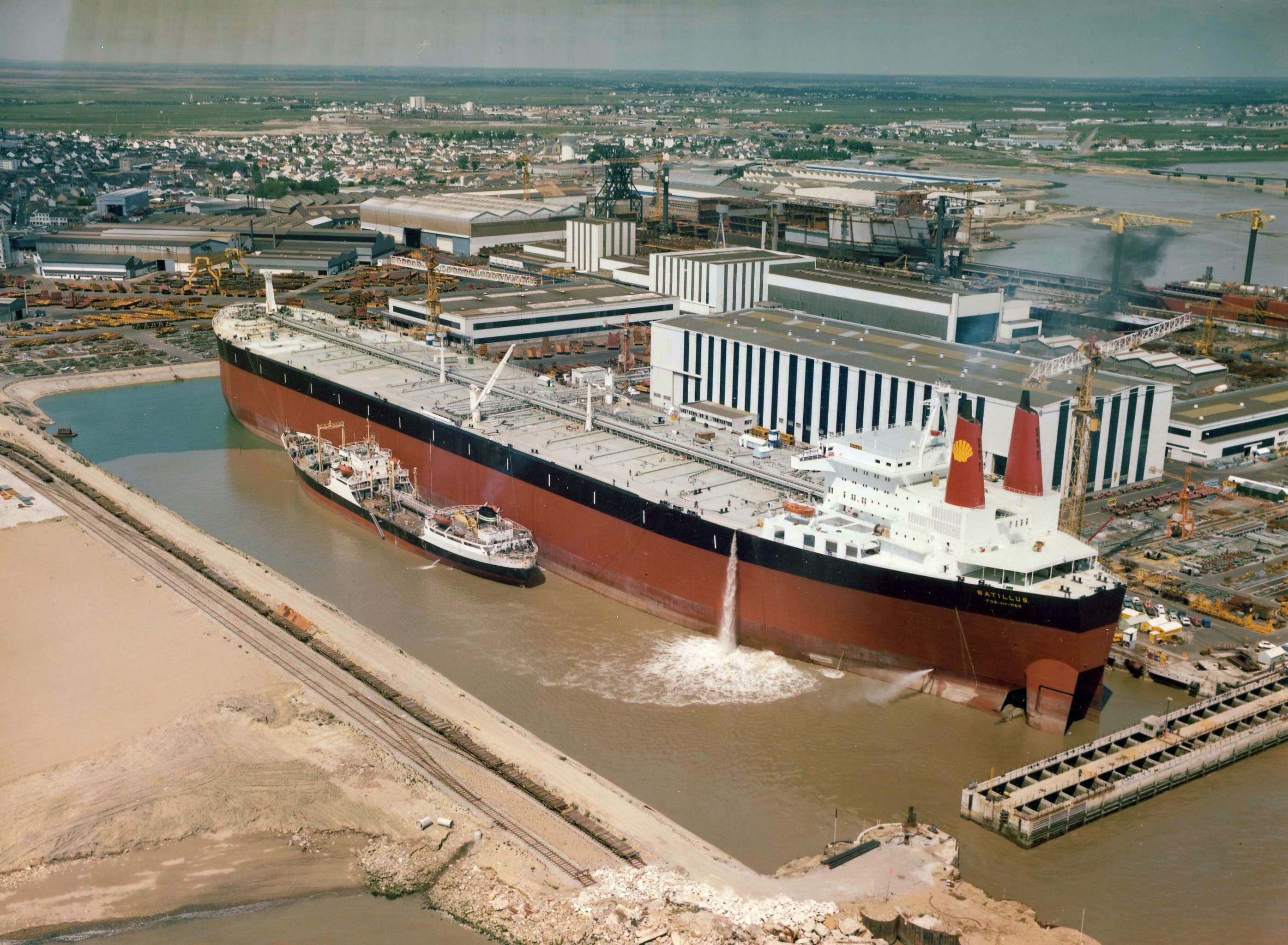
In the 1960s-1970S, the oil industry made similar bets in the years before the shocks, building ultra-large crude carriers, ports, refineries, pipelines, and other projects around assumptions about cheap and plentiful crude. Then when the underlying economics changed almost overnight, some of those assets became liabilities. AI infrastructure has a similar vulnerability because a multi-gigawatt campus can take years to plan and construct while the economics of the hardware inside it can change much faster.
This creates a critical financing problem. An investor committing capital to a data center today has to make assumptions about how demand for compute will develop several years into the future. That means forecasting electricity prices, GPU economics, hardware utilization, training demand, inference demand, and the value of the resulting capacity. As we know, GPUs also have relatively short economic lives compared with power plants or buildings, and successive generations can dramatically increase the performance available for a given dollar of capital. Small changes in any of these assumptions can therefore have a large effect on returns.
There is also considerable uncertainty about what will drive that demand. Training and inference have different compute requirements and different growth dynamics. Training and other R&D have long been major sources of demand, as companies have invested in ever larger models and increasingly costly training runs. Inference is different: it depends on how widely models are used, how often they are queried, and how much compute each task requires.
The assumption is that inference will eventually account for a much larger share of total compute as AI moves from model development to widespread use. But that shift has not yet happened to the extent often assumed. On the contrary, training’s share of compute has remained relatively stable so far, even as inference has grown. We therefore do not know how the balance between training and inference will evolve, which makes it harder to forecast the demand for the infrastructure being built today.
Now, there is still an important difference between AI and oil. OPEC countries could deliberately restrict the physical supply of a scarce natural resource. AI has a more complex supply system. New chips can be designed, data centers can be built, models can become more efficient, and software can extract more work from the same hardware. The supply of compute can therefore expand not only through new physical capacity but also through technology and better use of existing resources. Unlike oil scarcity back in the 1970s, compute scarcity is thus partly a question of technology and capital allocation, rather than simply a result of geopolitical tension.
Yet that does not make the physical constraints any less real. Electricity still has to be generated, transmission capacity built, chips manufactured, data centers connected to the grid, and capital committed years before the resulting capacity can earn a return.
Overall, the very integration that drove the first phase of the AI boom could become a source of strain. As infrastructure becomes larger, more expensive, and longer-lived, while models and demand evolve much faster, the economics of owning every layer of the stack may begin to diverge. That is where fragmentation can start to create value.

,_14_February_1945_(USA-C-545).jpg)