



America has a weak spot: it relies on the rest of the world to keep buying its debt. We’ve just had another example of this.
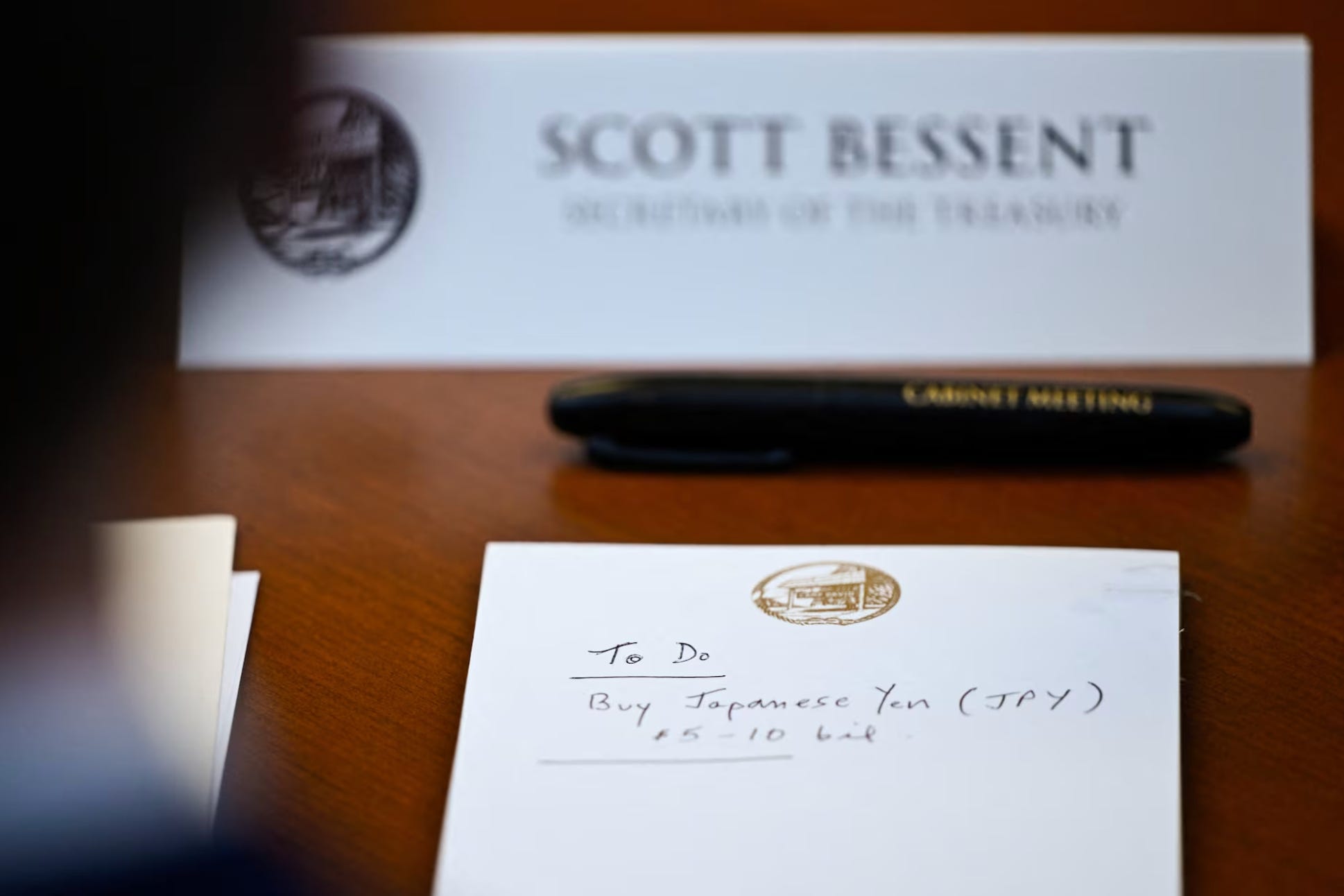
To the financial press, the recent joint US-Japan intervention to support the yen was a heartwarming show of transpacific solidarity. The US Treasury and Japan’s finance ministry had been coordinating on exchange rates for months — Finance Minister Satsuki Katayama said she and Bessent spoke around ten times, including a three-and-a-half-hour session over dinner during his May visit to Tokyo — and the effort culminated last Friday in the first joint US-Japan yen-buying intervention since 2011. A Reuters photo caught Bessent’s notepad at a Friday cabinet meeting reading “To Do: Buy Japanese Yen (JPY) $5–10 bil.” The coordinated buying, run by Japan’s currency diplomat Atsushi Mimura in close step with the Bank of Japan, helped firm the yen from around ¥162.80 to ¥157.80 to the dollar, pulling it back from a four-decade low. Some analysts even draw parallels to Washington’s support for Argentina’s peso under President Javier Milei, back in September 2025 when the country was battling currency instability ahead of key midterm elections.
But behind the scenes, this was less a philanthropic rescue mission than a cold, self-interested defensive bailout. Indeed, the mechanics of this intervention expose the fraying structure of the US dollar system. Washington now has to draw on its European allies and push its own financial institutions deeper into the management of a foreign-exchange crisis in an effort to keep its debt-recycling machine from grinding to a halt.
The imperial debt trap and the hostage crisis in the Treasury
For decades, America has benefited from a structural privilege that comes with issuing the world’s dominant reserve currency. The rest of the world wants dollars and, above all, dollar-denominated assets, allowing the US to run large external deficits while foreign savings flow back into American financial markets.
This creates a closed, circular capital flow:
The US imports physical, tangible goods from net savers such as China, Germany and Japan.
The US pays for these imports in dollars, which then flow back into the global financial system.
For surplus countries, there is an unusually deep and liquid market in which to recycle those dollars: US financial assets, above all US Treasuries.
This loop lets Washington run a huge $1.8 trillion deficit and keep total public debt at 122% of GDP without facing the consequences of hyperinflation or soaring borrowing costs at home. But this great privilege carries with it an existential vulnerability: the US has become structurally dependent on foreign central banks to continuously purchase and hold its debt. This is a creditor hostage situation.
In this context, the recent plunge of the Japanese yen toward 164 against the dollar has brought the Bank of Japan to a tipping point. Tokyo faced a painful choice: accept further yen weakness and the inflation it would bring, or intervene in the currency market by finding dollars with which to buy yen. One obvious source of those dollars was Japan’s enormous stock of US Treasuries, but selling them at scale would have put further pressure on the Treasury market.
Indeed, had Japan liquidated its entire Treasury portfolio, the sudden surge of supply would have sent US yields rocketing higher. The yield on the 30-year US bond had already hit more than 5.2 percent, its highest level in nearly two decades, leaving Washington unusually sensitive to any new source of selling pressure. The US government cannot easily absorb a further sharp rise in its debt-servicing costs.
That is why Scott Bessent came along. “Excess volatility” in currency markets was undesirable, he said. In fact, the intervention did something else: it protected America’s own debt market from the consequences of a yen crisis. Japan, the world’s biggest foreign holder of US Treasuries, would otherwise have been forced to sell dollars and Treasuries to defend its currency.
This desperate stabilization effort discloses two profound things about the geopolitical hierarchy of the dollar system.
Takeaway 1: Japan remains a sovereign vassal
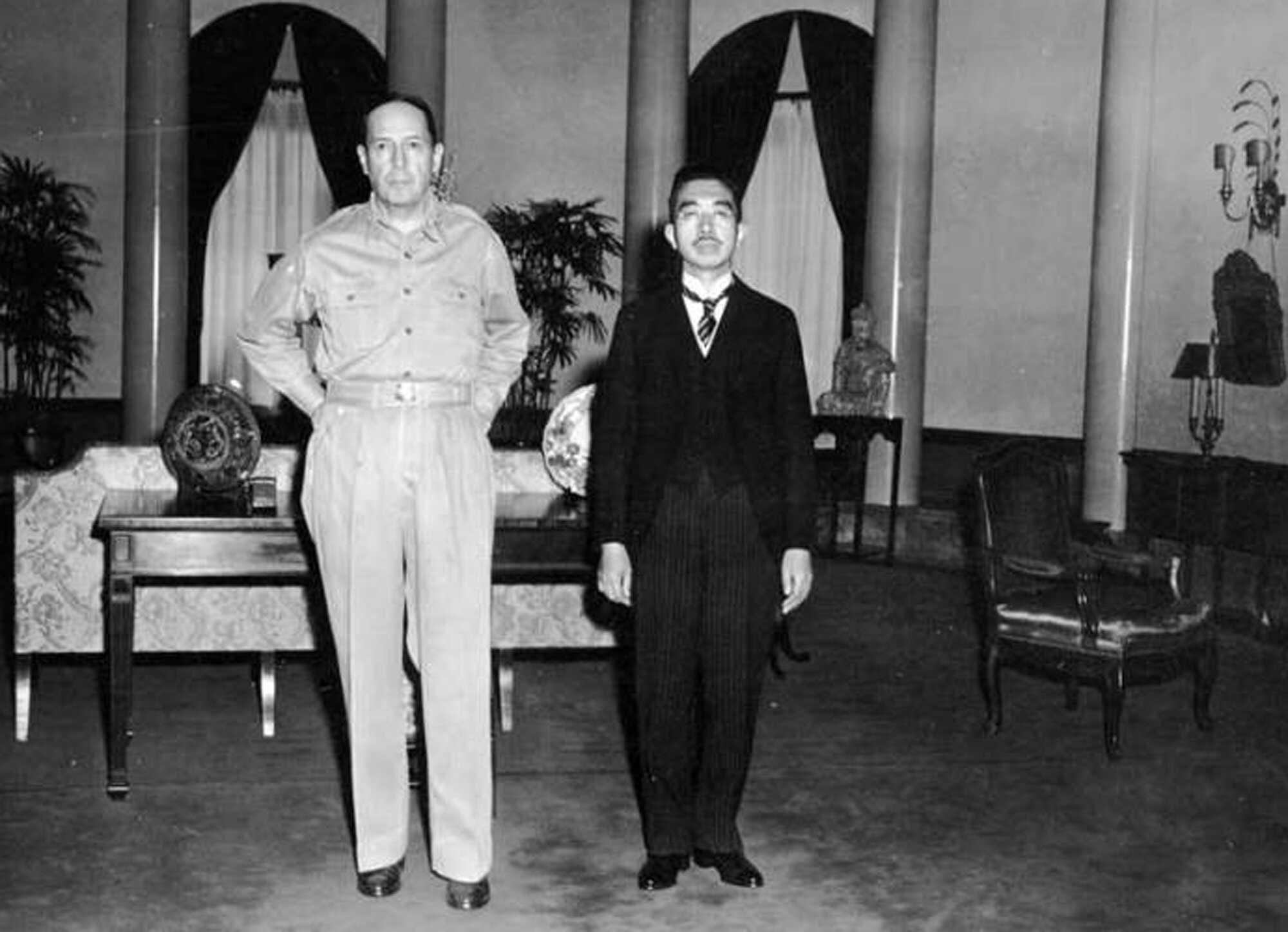
First, Japan is still a vassal of imperial America, in the great tradition that SCAP established in 1945.
General Douglas MacArthur, as Supreme Commander for the Allied Powers (SCAP), oversaw a far-reaching US-led occupation that demilitarized and democratized Japan and reshaped its political, social and economic institutions.
Over the following decades, this arrangement became a central feature of the Pacific financial system rather than a simple one-way bargain. Japan’s growth created large private and institutional savings pools, and Japanese investors became major purchasers of US assets—including Treasury securities—helping finance U.S. borrowing alongside domestic investors and other foreign creditors. Japan remains the largest foreign holder of Treasuries, with about $1.2 trillion recorded at the end of 2025.
And so, when the bill was due, Japan’s monetary sovereignty was completely subordinated to Washington’s domestic market needs.
In a healthy sovereign relationship, a nation in crisis has the freedom to use its own foreign reserves to defend its currency. Japan can, of course, sell its Treasury holdings. The problem for Washington was that Japan doing so at scale would have added selling pressure to the US Treasury market at a time when long-term borrowing costs are already high.
Accordingly, Treasury Secretary Scott Bessent has publicly pressured the Federal Reserve to expand its Foreign and International Monetary Authorities (FIMA) Repo Facility to paper over this restriction. From Japan’s perspective, the FIMA facility is a golden cage: it provides temporary liquidity by allowing Japan to borrow physical dollars against its Treasury holdings, without selling the underlying bonds.
In other words, the intervention amounts to a desperate backdoor bailout. By calling for the Fed to expand its balance sheet to provide a backstop for a transpacific crisis, Bessent has pushed the central bank deeper into a problem that sits at the intersection of monetary policy, foreign exchange and Treasury debt management. The boundary between the Federal Reserve’s monetary role and the Treasury’s need to protect its debt market is becoming harder to maintain.
Takeaway 2: Europe is the punching bag
Secondly, Europe is the punching bag as usual.
The most cynical, calculated part of this transpacific drama was the intervention mechanism: the US Treasury sold euros to buy yen during the intervention; and according to the Financial Times, the ECB was informed only after the transaction had been executed.
A country intervening in FX markets will usually buy or sell in its own currency. But doing it here would have added to the selling pressure on the dollar or tightened domestic US dollar liquidity. This is the reason why the US Treasury decided to sacrifice the euro instead.
Indeed, the US Treasury sold an estimated $5 billion to $10 billion of euro-denominated assets from the Exchange Stabilization Fund (ESF), which consumed roughly 40% of the US’s total euro holdings to that point ($10 billion of the $26 billion total euro assets held by both the Federal Reserve’s SOMA and the ESF).
The result was a classic case of transatlantic financial asymmetry. Washington could shore up its key Asian creditor by dumping euros, pushing the immediate cost of the intervention onto Europe’s currency rather than its own. The episode exposed how little say Europe has over the use of its currency in a monetary system still dominated by the dollar.
