



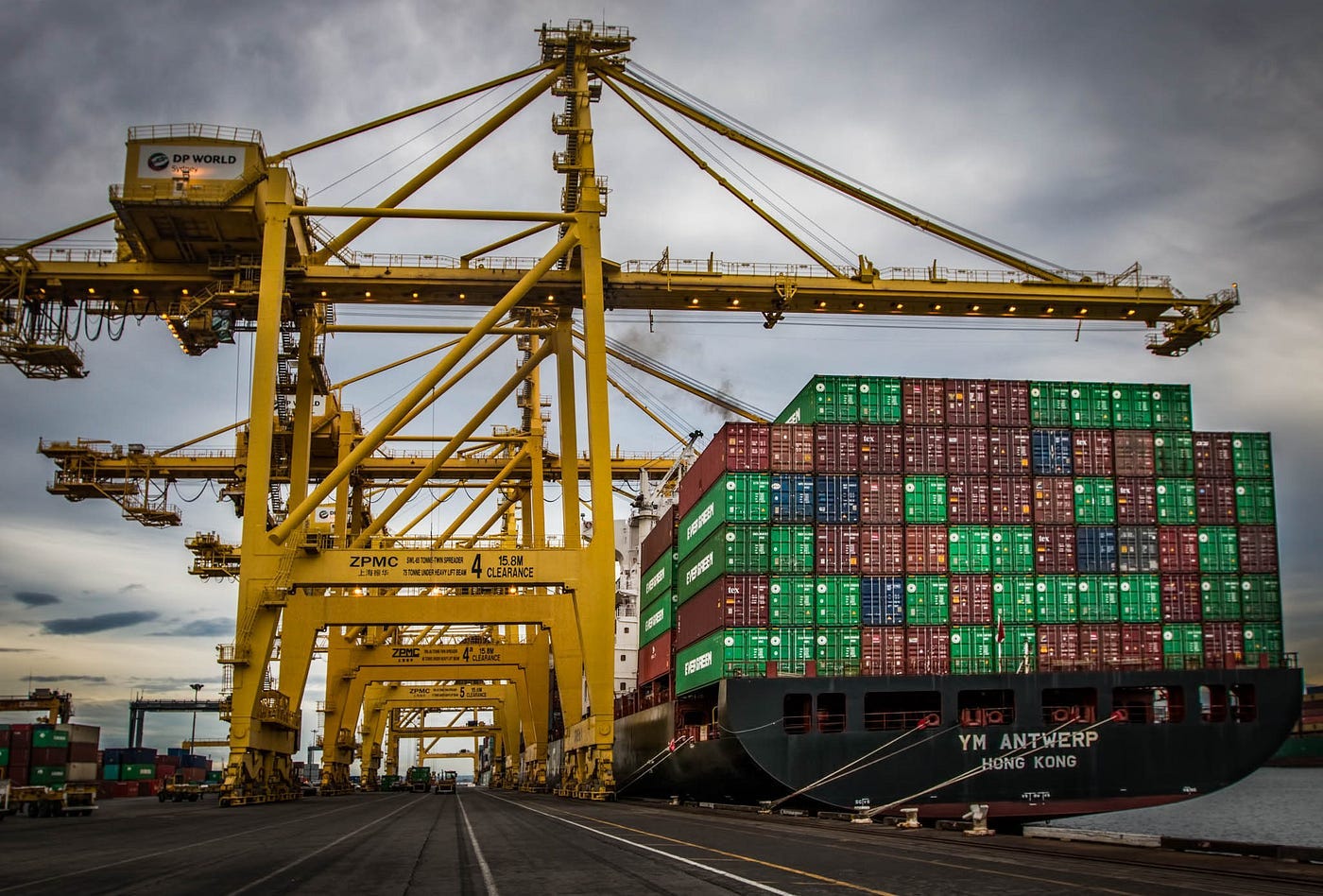
Everyone has been watching the ports and the railways. That was the wrong thing to watch.
China has quietly become the world’s largest official creditor. According to AidData’s dataset published in November last year — the most comprehensive analysis of Chinese overseas lending ever assembled — China’s lending portfolio has reached $2.1 trillion across 217 countries and territories. For every dollar it donates, it lends 35. To developed countries, the ratio is 761 to one. The share of its overseas portfolio that qualifies as development aid has fallen from 22% in 2000 to 1% in 2023. China’s overseas lending is the most aggressive return-seeking international lending operation in history — run by a nominally communist state using the capitalist playbook of investment, and then some.
That reframing is refreshing for everyone interested in China’s global soft power. Until recently, the debate about China’s overseas ambitions has been almost entirely focused on the Belt and Road Initiative (BRI) — the infrastructure programme launched under Xi Jinping in 2013, which built ports, roads, and railways across the developing world.
For years, critics have been calling the BRI debt-trap diplomacy: fragile states lured into loans they could not service, then forced to hand over strategic assets. The Hambantota port in Sri Lanka, leased to China for 99 years after Colombo could not service its debt, became the emblem of this critique. But the debt-trap framing, always contested, has been superseded by events. Infrastructure lending has fallen from 75% of China’s overseas portfolio in 2010 to less than 25% today. The BRI, in its original form, was phase one. Something more sophisticated seems to have replaced it by now.
To understand what China is actually building, it helps to start not with the BRI but with the dollar order it is trying to displace.
The Dollar Order as Alliance Coordination
The post-war dollar system is usually described in monetary terms: reserve currency, recycled surpluses, exorbitant privilege. But Izabella Kaminska, who joined us recently on Currency of Power, offers a different reading — one that clarifies what China is doing by contrast.

In Izabella’s view, the dollar system was designed to solve a structural problem in Western defense. Democracies are poor at sustained military coordination. They answer to electoral cycles and electorates that resist permanent sacrifice. The Soviet Union, as a command economy, faced none of those constraints. The dollar system solved this problem indirectly: by anchoring allied economies to American financial infrastructure, it allowed Washington to fund a global military posture without imposing the full cost on domestic taxpayers. Japan and Germany were rebuilt as export-led manufacturing powers. Their savings, recycled into US Treasuries, funded American security. The monetary arrangements served a strategic objective.
The dollar order was, in other words, an alliance coordination mechanism. The currency was the operating system. The goal was to implement “allied scale” — to pool and concentrate Western industrial and military capacity under a single umbrella, so that the democratic bloc could match the sustained resource commitment of a command economy.
Sinéad O’Sullivan, who spoke to us in an earlier edition, argues that China is itself a coordination system. Its central bank pursues social, employment, and political stability, deploying liquidity as a strategic instrument. The state planning apparatus decides which sectors grow and which absorb the costs of slowdown. That consistency — the ability to direct resources toward strategic objectives across decades — is something democratic market economies cannot match.

The US ran its system through a currency: countries that wanted access to American markets, American security, and American capital had to operate in dollars, which drew them into American-led institutions almost automatically. China has no currency with that kind of global reach, so it is building its network differently — through loans, infrastructure contracts, and increasingly energy systems that create direct dependencies on Chinese suppliers, Chinese financing, and Chinese technical standards. The monetary layer is coming, but it is being built on top of a physical and financial presence that is already extensive.
The New Playbook
AidData’s research makes clear that the BRI was never the whole story. For every four dollars China lends for infrastructure, it lends another six for activities that have nothing to do with infrastructure: corporate acquisitions, liquidity facilities, technology assets, critical minerals. By 2023, 76% of China’s overseas lending supported upper-middle and high-income countries. The single largest recipient of Chinese state credit is… America — which has received over $200 billion.
China’s playbook has several distinct components.
The first is the shift from aid to return-seeking capital. China has abandoned the role of a traditional donor. It lends on commercial or near-commercial terms, uses variable interest rates, requires collateral, and increasingly routes transactions through shell companies and offshore vehicles to limit scrutiny. Its cross-border acquisition lending — directed at technology assets, critical minerals, and strategic infrastructure — has an 81% success rate. Since the adoption of its Made in China 2025 industrial policy in 2015, the share of that acquisition lending targeting sectors that host countries have designated as sensitive on national security grounds has risen from 46% to 88%.
The second is the construction of a critical minerals supply chain. China has invested heavily across Africa, Southeast Asia, and Latin America to secure upstream extraction and midstream processing of the materials that clean energy and advanced technology require: copper, cobalt, nickel, lithium, rare earths. North American and European mining operations face a structural disadvantage: capital is available, but engineers and skilled workers are scarce. China built its position over decades. The West is now trying to replicate that in years.
The third — and the most consequential for the long run — is what we call the electrostate.

